
Stormwater Compliance in Louisiana: Why It Can’t Be an Afterthought for Industrial Facilities
Rainfall in Louisiana isn’t just frequent — it’s intense. For industrial facilities, that intensity means stormwater runoff carries serious regulatory weight. Without a properly designed and maintained Stormwater Pollution Prevention Plan (SWPPP), facilities risk violating the Louisiana Pollutant Discharge Elimination System (LPDES) requirements, leading to enforcement actions, fines, and operational disruptions.
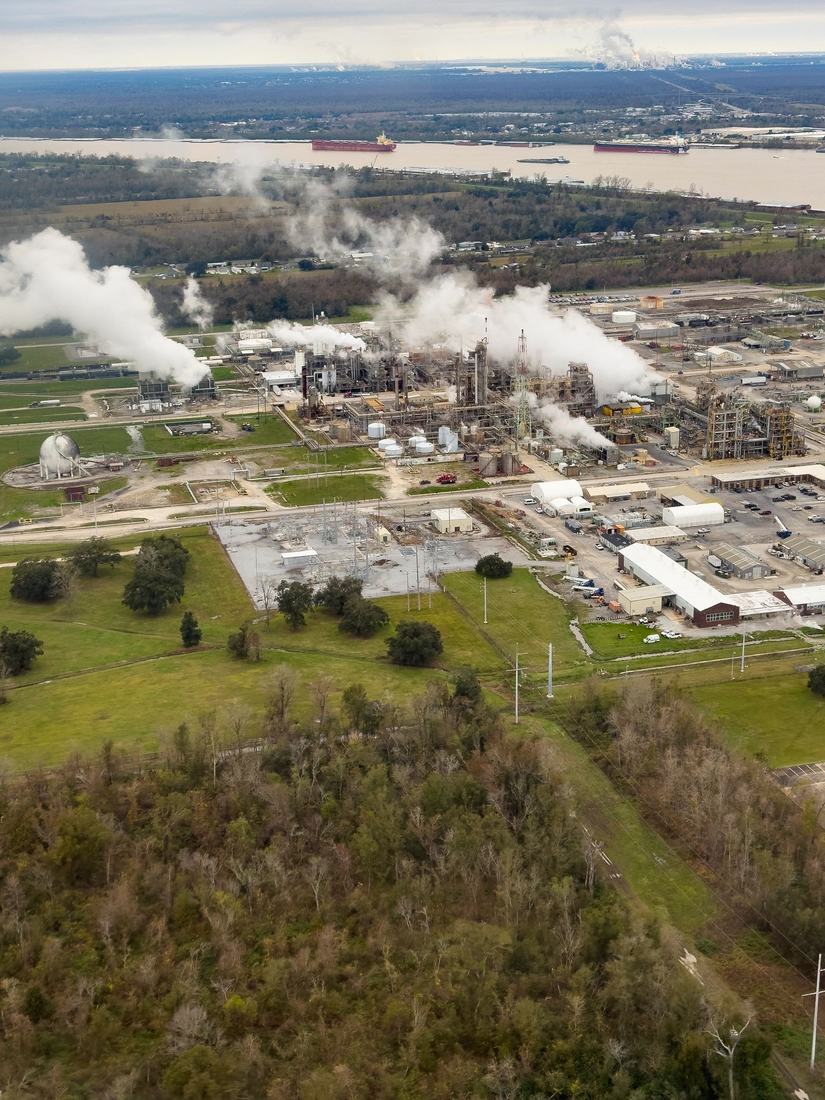
Industrial sites across the Louisiana Chemical Corridor, Acadiana, and the Gulf Coast must proactively manage runoff to prevent the discharge of oils, heavy metals, sediment, and process-related contaminants into local waterways and sensitive wetlands. Stormwater compliance is not just a paperwork exercise — it’s a core part of protecting your operations, your reputation, and the environment.
Choosing the Right Path: MSGP vs. Individual LPDES Permits
When a Louisiana industrial facility needs stormwater coverage under the LPDES program, the first major decision is whether to operate under the Multi-Sector General Permit (MSGP) or apply for an Individual LPDES Permit.
Multi-Sector General Permit (MSGP – LAR050000)
The MSGP is a standardized general permit designed for a broad range of industrial activities. It is generally faster to obtain because the conditions are pre-established by LDEQ.
- Coverage: Ideal for most manufacturing, chemical, refining, transportation, warehousing, and bulk storage facilities where stormwater discharges have a “significant potential for contamination.”
- Application Process: Requires submitting a Notice of Intent (NOI) using Form MSGP-G. Coverage is typically granted within 30 days if the NOI is complete and the facility is eligible.
- Requirements: Sector-specific Best Management Practices (BMPs), benchmark monitoring, and annual reporting.
- Best For: The majority of industrial facilities that discharge only stormwater from industrial areas.
Individual LPDES Permit
An Individual LPDES Permit is facility-specific and tailored to the unique operations, discharge characteristics, and environmental risks of the site.
- Coverage: Required for complex operations, facilities with a history of violations, or those located near environmentally sensitive areas (such as wetlands or coastal zones) where the standard MSGP conditions may be inadequate.
- Application Process: More rigorous. Requires detailed monitoring data, site-specific pollution controls, and a comprehensive justification.
- Requirements: Often includes more stringent monitoring parameters, site-specific effluent limits, and more frequent reporting.
- Best For: Larger refineries, complex chemical plants, or facilities with non-standard discharges.
Important: Construction Activity Is Not Covered Neither the MSGP (LAR050000) nor an Individual LPDES Permit covers construction-related stormwater. Land-disturbing construction activities of one acre or more require separate coverage under Louisiana’s Construction Stormwater General Permits:
- LAR100000 – Large construction (5 acres or more)
- LAR200000 – Small construction (1 to less than 5 acres)
Each requires its own SWPPP, inspections, and NOI to LDEQ.
7 Common Stormwater Compliance Failures in Louisiana (And How to Fix Them)
Here are the most frequent stormwater violations we see across Louisiana industrial facilities — along with practical solutions:
- Failure: Outdated or Generic SWPPPs
Issue: Many facilities operate with plans that no longer reflect current site conditions or operations. Solution: Treat your SWPPP as a living document. Review and update it at least annually — and immediately after any operational or physical change.
- Failure: Poor Housekeeping and Material Exposure
Issue: Uncovered materials, leaking containers, and debris accumulation are common inspection triggers. Solution: Implement routine housekeeping protocols and ensure all potential pollutant sources have proper secondary containment.
- Failure: Inconsistent or Missed Inspections
Issue: Skipping monthly visual inspections or failing to document them properly creates compliance gaps. Solution: Assign a qualified SWPPP manager and put inspections on a fixed schedule with standardized checklists.
- Failure: Improper Sampling and Monitoring
Issue: Samples taken outside qualifying storm events or with poor chain-of-custody can invalidate your data. Solution: Only sample during qualifying events (≥0.1 inch after 3 hours of dry weather) and maintain full documentation.
- Failure: Failure to Document Corrective Actions
Issue: Even if you fix a problem, regulators expect clear records. Incomplete logs are treated as non-compliance. Solution: Maintain a corrective action log that captures the issue, root cause, action taken, responsible person, and completion date.
- Failure: Unauthorized Non-Stormwater Discharges
Issue: Equipment wash water, boiler blowdown, or process water released without authorization is a frequent source of NOVs. Solution: Conduct regular dry-weather outfall inspections and ensure all non-stormwater discharges are properly permitted or eliminated.
- Failure: Ignoring Site Changes
Issue: New tanks, paving, or drainage modifications made without updating the SWPPP leave facilities exposed. Solution: Establish a change-control process so any modification triggers a SWPPP review and update.
The Real Cost of Falling Behind
When facilities fall out of compliance, LDEQ can issue Notices of Violation (NOVs), which often lead to fines, increased inspection frequency, and in serious cases, operational restrictions. Beyond the financial penalties, repeated violations can damage your reputation with regulators and the local community — making future permitting and expansion projects more difficult.
Proactive compliance protects more than just your permit status. It protects your operations and your standing in one of the most heavily regulated industrial regions in the country.
How ClearPath Environmental Consulting Can Help
Maintaining a compliant SWPPP requires ongoing attention and expertise. At ClearPath, we support industrial facilities throughout the full lifecycle of their stormwater programs. Our services include:
- Annual SWPPP reviews and re-certification
- Quarterly site assessments and compliance audits
- Construction stormwater permitting and inspection support (LAR100000 / LAR200000)
- SWPPP training for your team on inspections, recordkeeping, and spill response
Whether you operate under the MSGP (LAR050000) or an Individual LPDES Permit, we help you stay ahead of requirements and reduce risk.
Frequently Asked Questions About Stormwater Compliance in Louisiana
Is my industrial facility required to have a stormwater permit? Facilities engaged in industrial activity that discharge stormwater to surface waters or storm drains are typically required to obtain coverage under the Multi-Sector General Permit (LAR050000) or an Individual LPDES Permit.
How often are inspections required? Monthly visual inspections are mandatory. These must be documented, conducted by a qualified person, and include assessment of drainage, storage, and potential pollutant sources. Additional inspections are required after qualifying storm events.
When should we update our SWPPP? Your SWPPP must be reviewed and updated at least annually — or immediately after any site change, process modification, or compliance finding.
Do we need to conduct self-audits? Yes. Annual compliance evaluations (self-audits) are required. They verify that inspections, recordkeeping, BMPs, and corrective actions are compliant.
What records must be kept? Inspection reports, SWPPPs, sampling data, and self-audits must be kept for at least five years and be available upon request.
Can improper stormwater management lead to fines? Yes. Unpermitted discharges, inadequate containment, or missed inspections can result in substantial penalties from LDEQ. Proactive management minimizes both risk and cost.
Does the industrial stormwater permit cover construction? No. Land-disturbing construction activities of 1 acre or more require separate coverage under the Louisiana Construction Stormwater General Permits (LAR100000 or LAR200000), including their own SWPPP and NOI.
Stay Ahead of the Storm
Stormwater compliance isn’t just another regulatory requirement — it’s a frontline defense for industrial facilities across Louisiana. With coastal zones and sensitive wetlands facing continued scrutiny from LDEQ and EPA, a reactive approach can lead to enforcement actions, steep fines, and operational disruptions.
Facilities that implement robust SWPPPs, conduct routine inspections, and maintain accurate documentation position themselves to adapt quickly to regulatory changes and avoid costly violations.
Now is the time to audit your current stormwater protocols, verify that your SWPPP is site-specific and up to date, and train key personnel on inspection best practices. Taking these steps today ensures long-term compliance, operational continuity, and confidence when regulatory inspections occur.